Educational Visit to the European Centre of Excellence in AI for Digital Humanities
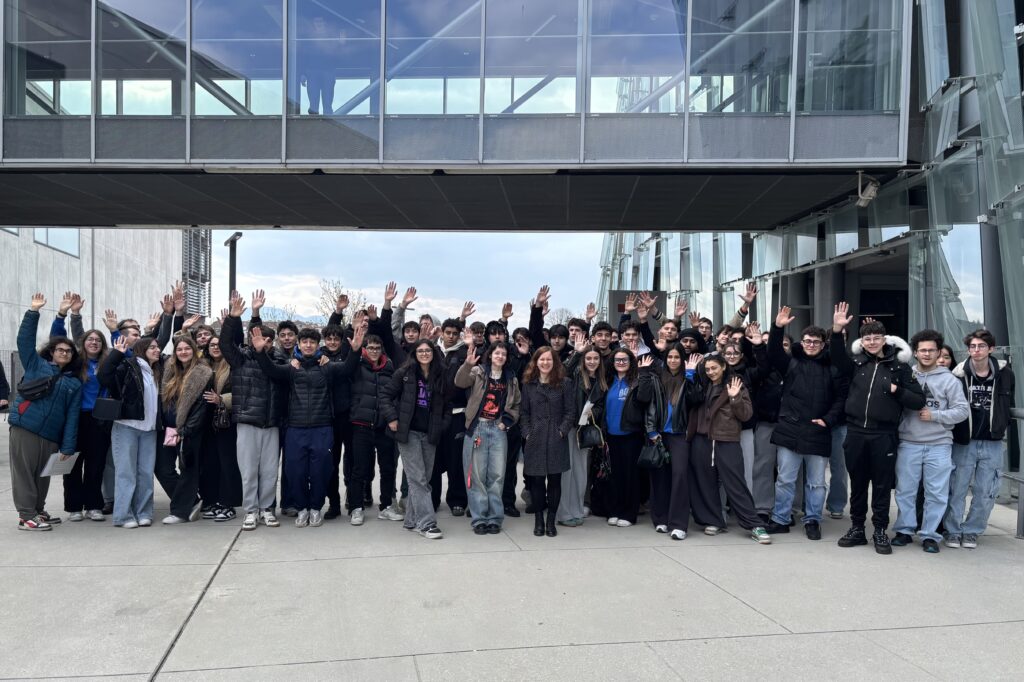
On 20 March, the European Centre of Excellence in AI for Digital Humanities welcomed a group of 40 Italian high school students from IIS Blase Bascal Reggio Emilia. The visit offered students an opportunity to learn how artificial intelligence is used in research and to explore both the possibilities and the responsibilities that come with it.
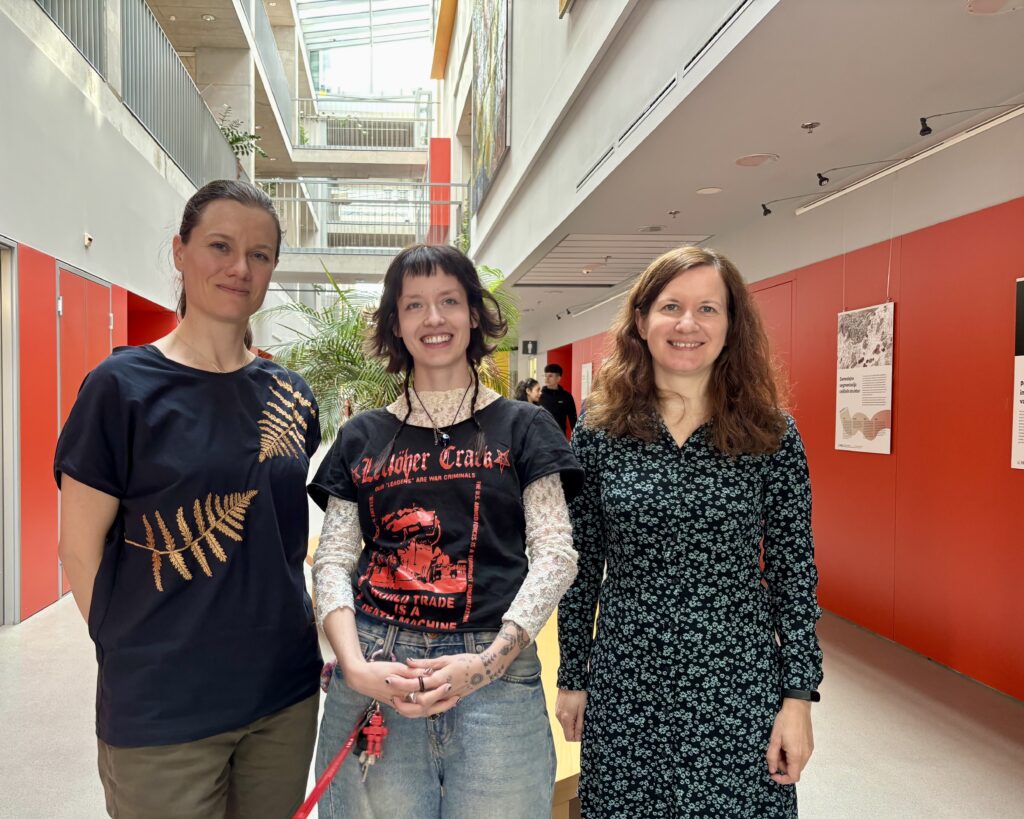
The students attended three presentations delivered by Tjaša Arčon, Dr Ajda Pretnar Žagar, and Rebeka Kropivšek Leskovar, each focusing on a different application of AI.
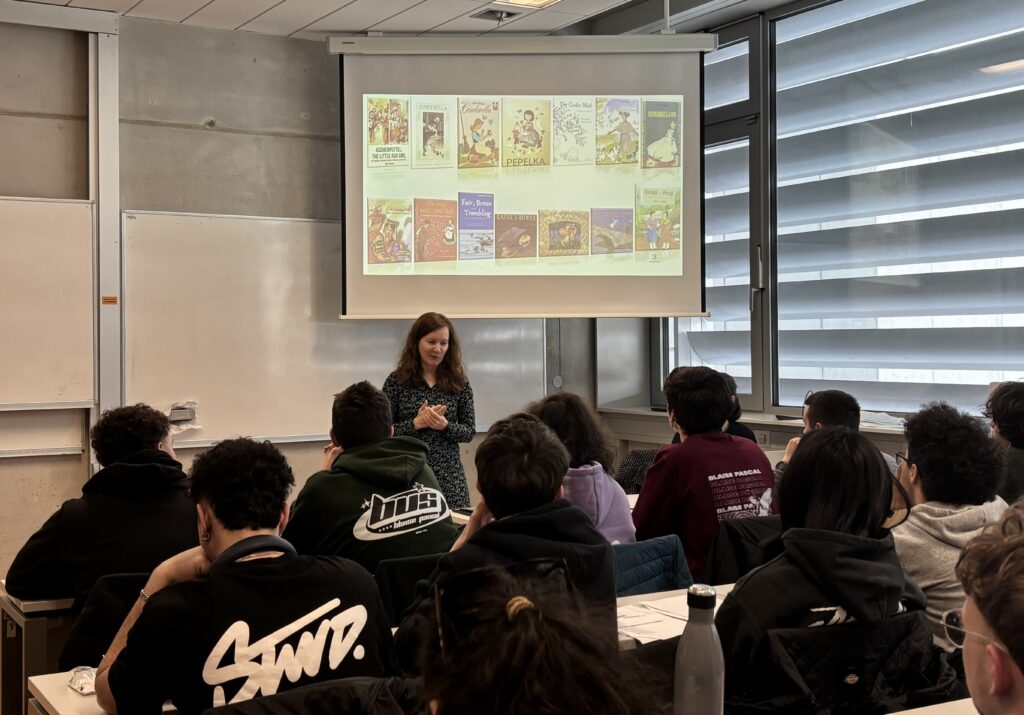
Tjaša Arčon presented her research on exploring Cinderella motifs across the world using artificial intelligence. She showed how large language models can be used not only for conversation but also as research tools for analysing texts and identifying hidden patterns. Using different versions of the Cinderella story, she demonstrated how an AI model can analyse numerous texts and detect whether key motifs are present, such as cruel relatives, magical assistance, or the well-known glass slipper. In the field of digital humanities, this kind of AI enables researchers to analyse far more texts than they could read manually and to discover patterns across cultures, giving researchers a “superpower” to scan thousands of stories at once.
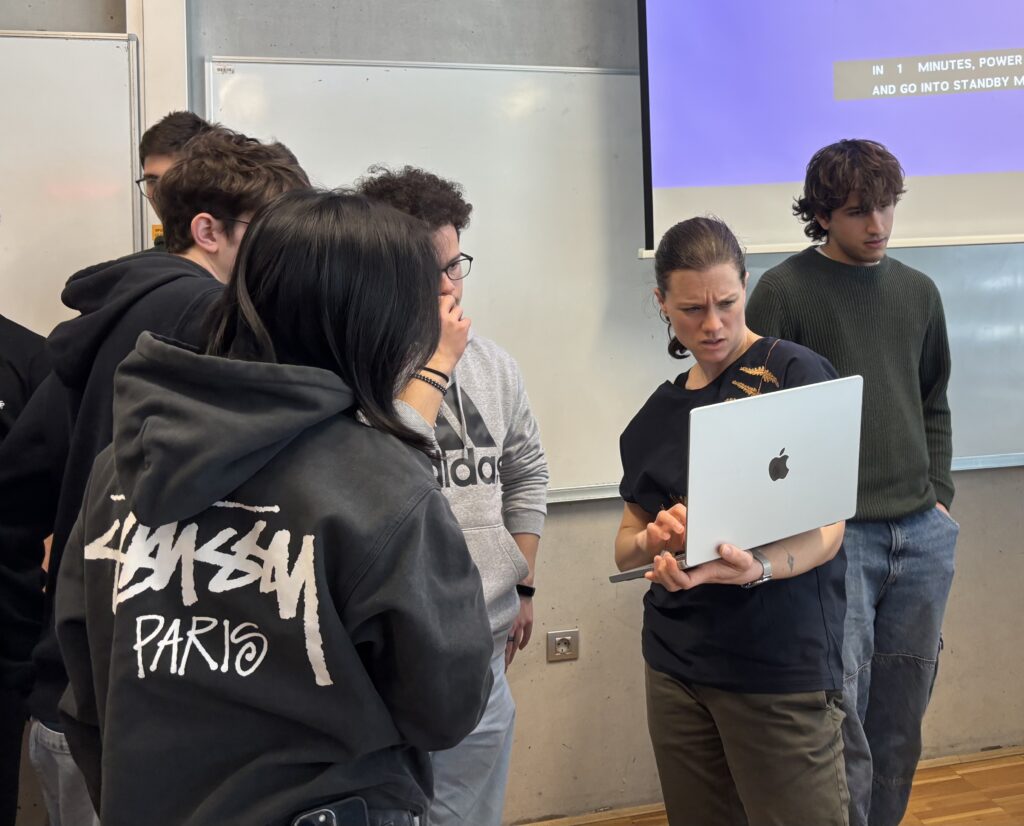
Dr Ajda Pretnar Žagar then presented how artificial intelligence can help analyse climate data in European capitals. She introduced clustering, a key AI technique that can be used to identify customer sentiment, organise collections of texts by similarity, or detect fraudulent transactions. During the session, students explored how clustering can be applied to climate data from European capitals and observed whether the identified clusters correspond to climate zones.
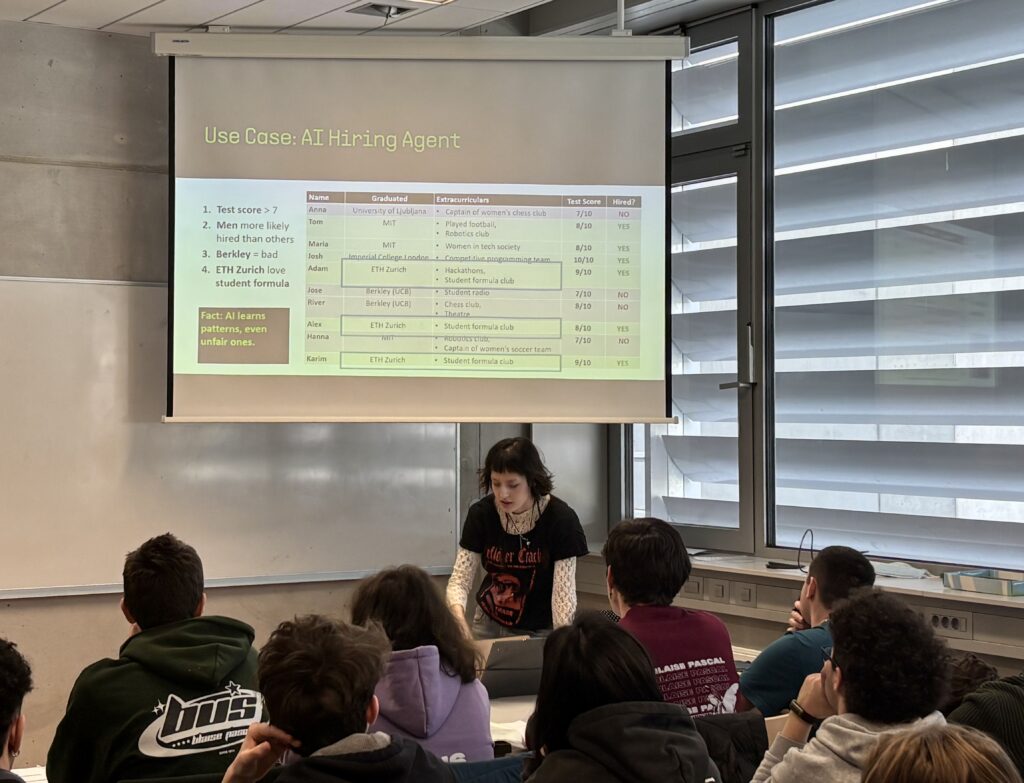
Finally, Rebeka Kropivšek Leskovar spoke about ethics in responsible AI, focusing on key issues such as bias, transparency, and privacy. Together with the students, she discussed why ethics matter in artificial intelligence and how AI systems always learn patterns, including potentially unfair ones.
The visit provided students with a practical insight into how artificial intelligence is used in research today and highlighted both its powerful capabilities and the importance of ethical awareness when developing and using AI technologies.