AI4DH Lecture at the Faculty of Arts, University of Ljubljana
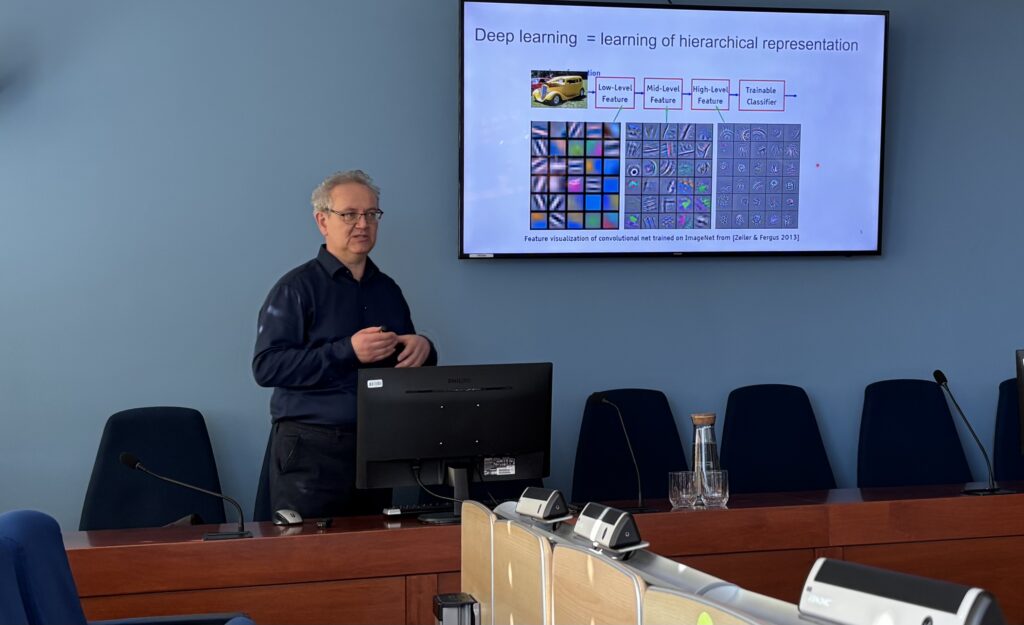
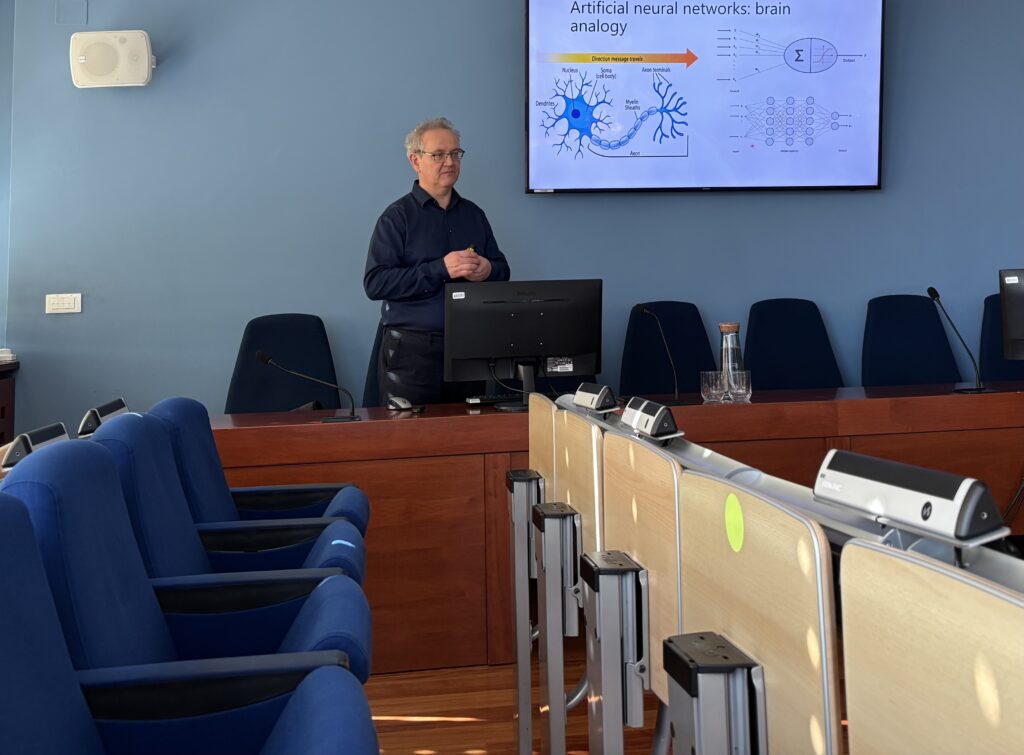
On Tuesday, 3 March 2026, Prof. Dr Marko Robnik Šikonja gave a lecture titled “Large Language Models for Analyses in Digital Humanities” at the Faculty of Arts, University of Ljubljana.
The lecture first explained what large language models are and how they work. The second part addressed methodological challenges faced by researchers when applying AI-powered methods in their work.
Research conducted with commercial models such as ChatGPT last year would likely yield different results today. Large language models are evolving at an extraordinary speed, and commercial models have a life cycle of roughly a year, which raises a crucial methodological question about the reproducibility of research.
Currently, large language models (LLMs) are redefining methodological approaches in many scientific areas, including digital humanities, linguistics, social sciences, literary studies, historiography, journalism, political science, folkloristics, and others. Harnessing their immense potential to process and analyse large amounts of text, LLMs can provide complex insights into complex phenomena. LLMs are pretrained on huge text corpora by predicting the next tokens. The lecture underscored that this does not make them immune to hallucinations and biases, requiring a human-in-the-loop approach, careful methodological design, and strict qualitative and quantitative evaluation. The lecture explained how LLMs work, which is necessary to understand their performance. In the context of analysing complex phenomena, the two most frequent adaptations of LLMs – fine-tuning and prompt engineering – were discussed, using examples from social media analysis and folkloristics. The need to establish trust in their performance when analysing complex phenomena was emphasised, with an outline of the evaluation methodology.
The lecture was recorded, and the video will be shared soon.